

Fresh-Milled Flour Cinnamon Rolls
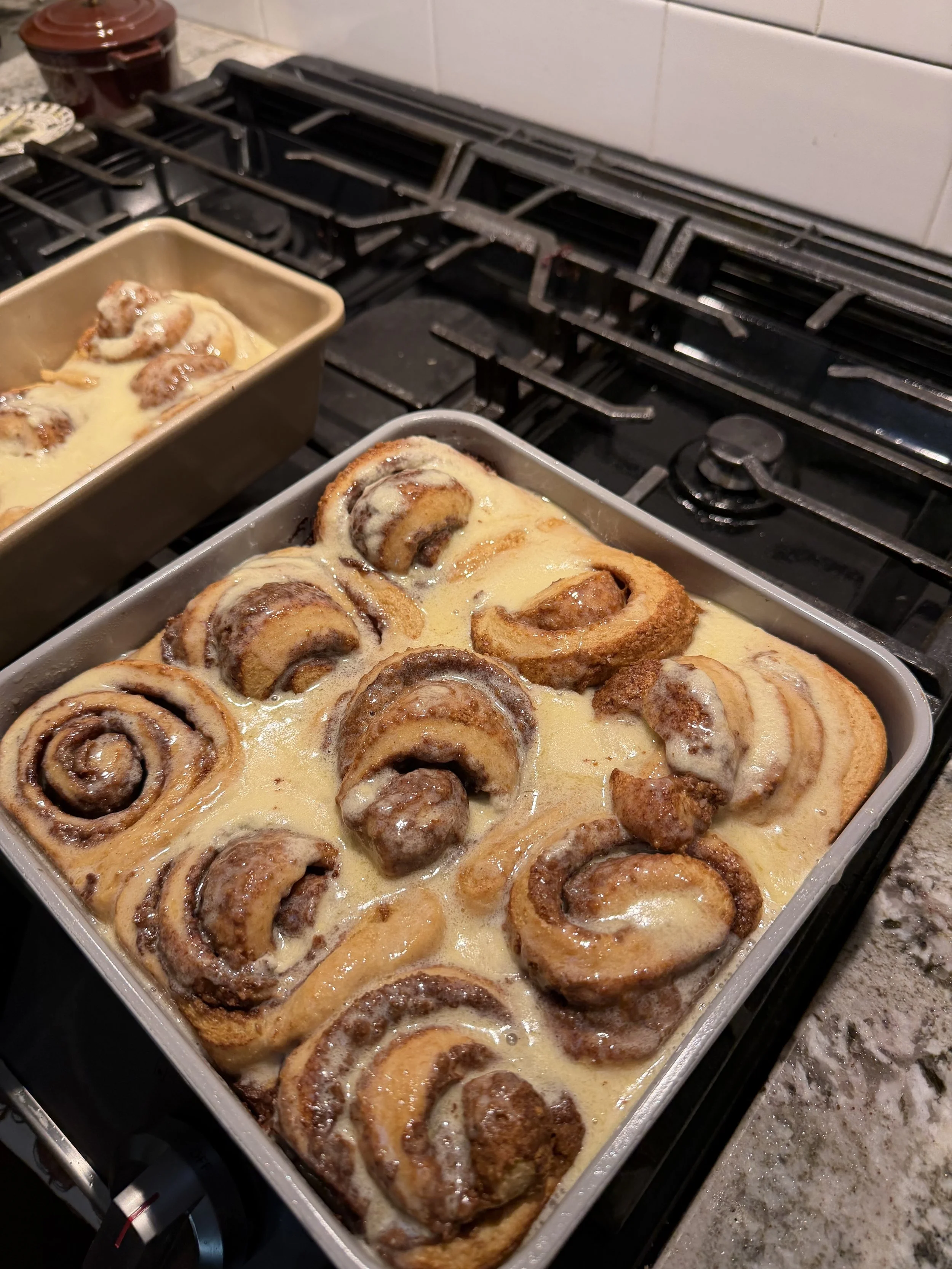
Soft, fluffy, homemade cinnamon rolls made with freshly milled wheat, a cinnamon-sucanat filling, and a simple vanilla icing. These are the kind of cinnamon rolls that make the whole kitchen smell like home.
Before you begin: Read through the entire recipe before starting, as the flour is added gradually and the dough requires two rise times.
Ingredients
Cinnamon Roll Dough
2⅔ cups wheat berries, milled (approximately 4 cups freshly milled flour)
1 cup buttermilk or milk, room temperature
2 tablespoons honey
1½ tablespoons instant yeast
½ cup butter, softened
¼ cup sucanat
1½ teaspoons salt
2 eggs
Fresh-milled flour note: You may not need all of the flour. Freshly milled flour can behave differently depending on the wheat and environment, so add it gradually. Freeze any leftover freshly milled flour to help preserve its freshness.
Cinnamon Filling
Softened butter, enough to evenly cover the rolled dough
1 cup sucanat
2 tablespoons cinnamon
1 tablespoon cornstarch
Icing
¼ cup milk
¼ cup butter, melted
2 teaspoons vanilla extract
Small dash almond extract, optional
Pinch of salt
1–1½ cups powdered sugar, or enough to reach a smooth, pourable consistency
Instructions
1. Hydrate the Freshly Milled Flour
Add 1½ cups of the freshly milled flour to the bowl of a stand mixer along with the room-temperature buttermilk or milk, honey, and instant yeast.
Mix until combined.
Allow the mixture to rest for 20 minutes. This hydration period gives the freshly milled flour time to absorb the liquid and helps create a softer finished cinnamon roll.
2. Make the Dough
Add the softened butter, sucanat, salt, and eggs.
Begin gradually adding some of the remaining freshly milled flour. Do not add all of the flour at once. Stop adding flour when the dough comes together but remains slightly sticky.
Begin kneading and check the consistency after about 5 minutes. If the dough is still too wet, add a little more flour as needed.
Freshly milled dough changes as it kneads and continues to absorb moisture. Adding too much flour at the beginning can result in dry cinnamon rolls, so err on the side of a slightly sticky dough.
Knead for approximately 11–15 minutes in a stand mixer or at least 22 minutes by hand.
Use the windowpane test to check the gluten development: gently stretch a small piece of dough between your fingers. When it can stretch thin enough for light to pass through without immediately tearing, the dough is ready.
3. First Rise
Cover the dough and allow it to rise in a warm place for 1–1½ hours, or until approximately doubled in size.
Dough loves a warm, moist environment, so cover the bowl with a damp tea towel or another bowl. You can also place it in a warm oven, keeping the temperature no higher than 100°F.
4. Make the Cinnamon Filling
While the dough rises, combine the sucanat, cinnamon, and cornstarch in a small bowl. Set aside.
5. Form the Cinnamon Rolls
Roll the risen dough into a large rectangle.
Spread softened butter evenly across the surface, leaving approximately a 1-inch border along the edge that will be pinched closed. This helps keep the filling from oozing out while the rolls bake.
Sprinkle the cinnamon-sucanat mixture evenly over the butter.
Starting along a long edge, roll the dough lengthwise into a log. Pinch the seam closed.
Cut the log into rolls approximately 1½–2 inches thick.
Place the rolls in a lightly oiled baking pan or on a baking sheet lined with parchment paper.
6. Second Rise
Cover the rolls and allow them to rise in a warm place for another 30 minutes.
While they rise, preheat the oven to 350°F.
7. Make the Icing
Combine the milk, melted butter, vanilla extract, optional almond extract, and salt.
Gradually add the powdered sugar, mixing until the icing is smooth and reaches your desired pourable consistency.
For an extra-special flavor, add just a small dash of almond extract.
8. Bake
Bake the cinnamon rolls at 350°F for 20–25 minutes, or until lightly golden brown.
For an extra check, use a food thermometer on one of the center rolls. I find they are perfectly baked when the center reaches approximately 195°F.
9. Ice & Serve
Allow the cinnamon rolls to cool slightly before drizzling the icing over the top.
And if you prefer them a little less sweet, these cinnamon rolls are flavorful enough to enjoy without the icing, too.
A Little Kitchen Memory
There’s something about cinnamon rolls that feels like home. Some recipes are more than just a list of ingredients—they remind us of the people, kitchens, and moments that shaped us.
What food instantly brings you back to your childhood—and who taught you how to make it?
I would love to hear your family memory in the comments.
Thank you so much for spending this time in the kitchen with me. If you enjoyed this story and recipe, share it with someone who also believes the best recipes are the ones filled with memories.
Make These Cinnamon Rolls With Me

Want to see the whole process from start to finish? Watch the video below and come into the kitchen with me as I make these fresh-milled flour cinnamon rolls step by step.
Watch the full recipe below, and don’t forget to subscribe on YouTube for more fresh-milled recipes, nourishing meals, and time together in the kitchen.
